
Mary Magdalene Marshall opens the Marshall House on Broughton Street in Savannah's premier shopping district.

History
The Marshall House is more than a place to stay—it’s a piece of Savannah’s living history. Explore the hotel's story through historic photographs, artifacts, and collectible memorabilia displayed throughout the hotel. Join us for a weekly history talk in the lobby, led by a local historian, and discover the legacy of Mary Marshall—founder of the hotel in 1851.
Savannah's oldest hotel
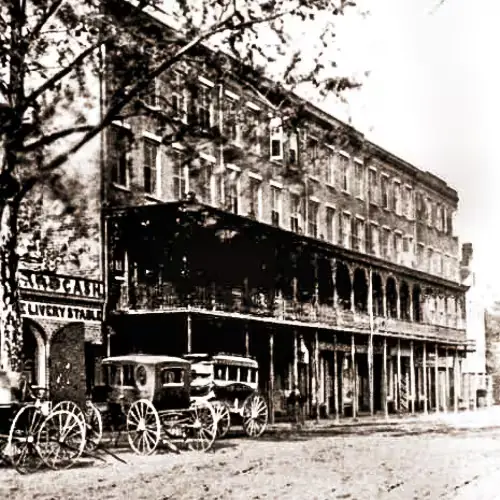
During the railroad boom of the 1840s and 1850s Savannah doubled in size and population. Seeing a real need for accommodations and housing, businesswoman Mary Marshall developed several properties in Savannah, most notably the iconic Marshall House hotel in 1851.
Mary Marshall and her estate leased and collected rents from The Marshall House until 1914. The hotel’s colorful history includes roles as a hospital during the Yellow Fever Epidemics in the mid-1800s, and as a Union hospital during the final months of the Civil War.
a house of history and letters
The Marshall House was also home to Joel Chandler Harris, author of the famous Uncle Remus Stories, during the Reconstruction Period.
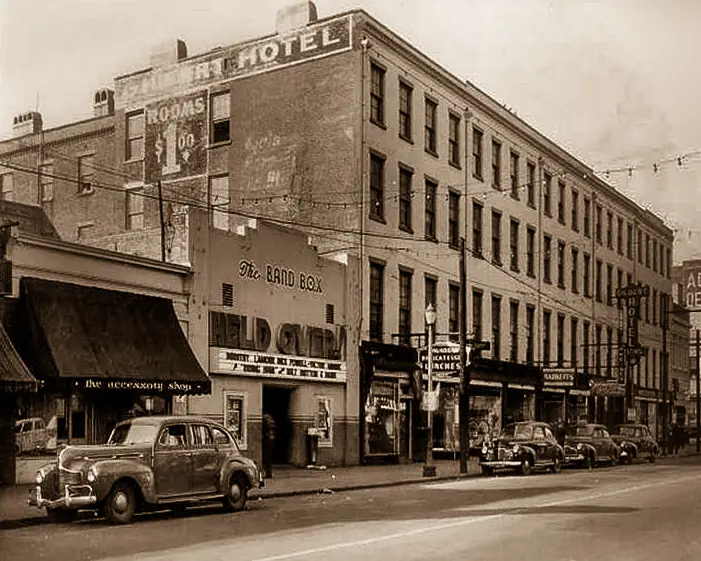
For economic and structural reasons, The Marshall House was closed in 1957. The 2nd, 3rd, and 4th floors were abandoned, but the ground floor was maintained for various shopkeepers and stores until 1998.
the hotel reborn
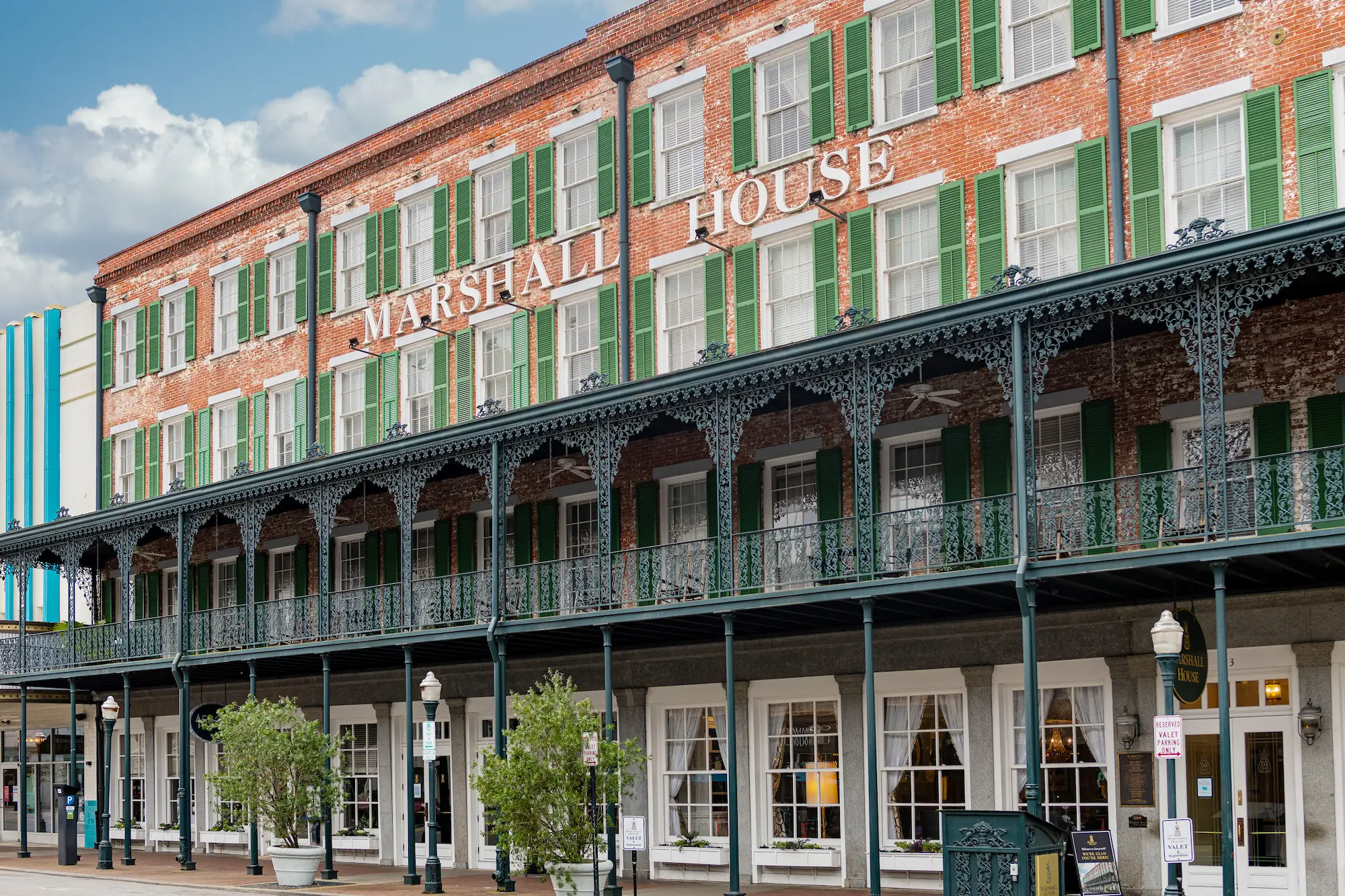
In 1999, The Marshall House was extensively restored, and once again became a Savannah fixture. Great efforts were taken to ensure the hallmarks of the historic hotel were preserved or recreated: including the Philadelphia Pressed Brick on the façade and the Savannah Grey Brick throughout, original staircases, original wood floors, fireplaces, brick walls, the doors to each guest room, and several claw foot tubs dating back to 1880.
The veranda and gas lights were reproduced in the likeness of the original features. The Courtyard Atrium was encased with a glass ceiling to give a sense of the area’s previous use as a courtyard. Artifacts found during the restoration are encased in display cabinets on the second and third floor.
Timeline of the Marshall House
The current manager, Ralph Meldrim, erects an iron veranda 120 feet in length and 12 feet deep — one of the hotel's signature features.
Fully renovated, repainted, and refurnished, the hotel reopens to the public.
The hotel is occupied by Union troops led by General William Tecumseh Sherman, serving as a Union hospital until the end of the Civil War.
Marshall Hose Company (Volunteer Fire Department) is founded to protect The Marshall House and neighboring properties.
The adjoining "Florida House" is annexed, expanding the hotel's capacity by roughly one third.
Hotel closes.
Hotel reopens as The Marshall House with electric lights and hot and cold baths on every floor.
Herbert W. Gilbert leases the building and briefly renames it the Gilbert Hotel.
Herbert Gilbert sells the hotel and eight stores. The property now features a lobby, dining room, 66 guest rooms, one suite, and more.
The Marshall House reopens after a complete renovation.
The 106-year-old Marshall House closes — fire code compliance on a short-term lease was not feasible.
Renovations begin once again.
The Marshall House, fully restored, reopens as Savannah's oldest hotel.
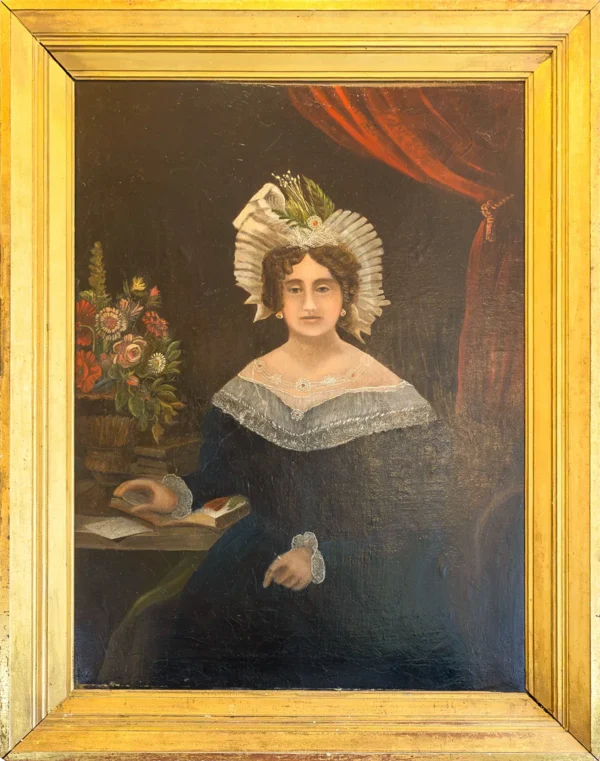
Who was mary marshall?
As you enter the lobby at The Marshall House, you’ll see an oil painting of Mary Marshall behind the reception desk. This portrait is our most treasured antique, acquired from the estate of Jim Williams — the central figure in John Berendt’s Midnight in the Garden of Good and Evil. Completed in 1830 by artist Peter Laurens, it depicts Mrs. Marshall in her early forties.
Mary Marshall was a prominent figure through much of Savannah’s turbulent history. She was born during the last year of the Revolution, and died at the age of 93 during the last days of Reconstruction in the South. At her death in 1877, she was considered very successful in Savannah’s financial and social circles.
Mary’s grandparents settled in Savannah during the early days of the founding of the colony. During the American Revolution, she had relatives fighting on both sides during the Siege of Savannah. Her father, Gabriel Leaver, was a cabinetmaker who shrewdly acquired several choice pieces of property in Savannah before his death in 1795.
Upon inheriting her father’s estate and his business acumen, Mary Marshall continued to buy and develop land, growing her wealth tenfold during her lifetime. Along with The Marshall House, there are two other notable Mary Marshall landmarks within a short walk. Her double-tenement house sits behind the hotel on Oglethorpe Square, and the iconic Marshall Row lies on Oglethorpe Street across from Colonial Park Cemetery.